New Hampshire Winters Don't Care What Your Steps Are Made Of
Why granite outperforms concrete for outdoor steps in New Hampshire's harsh freeze-thaw climate. Learn about the science behind material durability, long-term cost comparisons, and why homeowners throughout southern NH are choosing granite over concrete for their outdoor projects.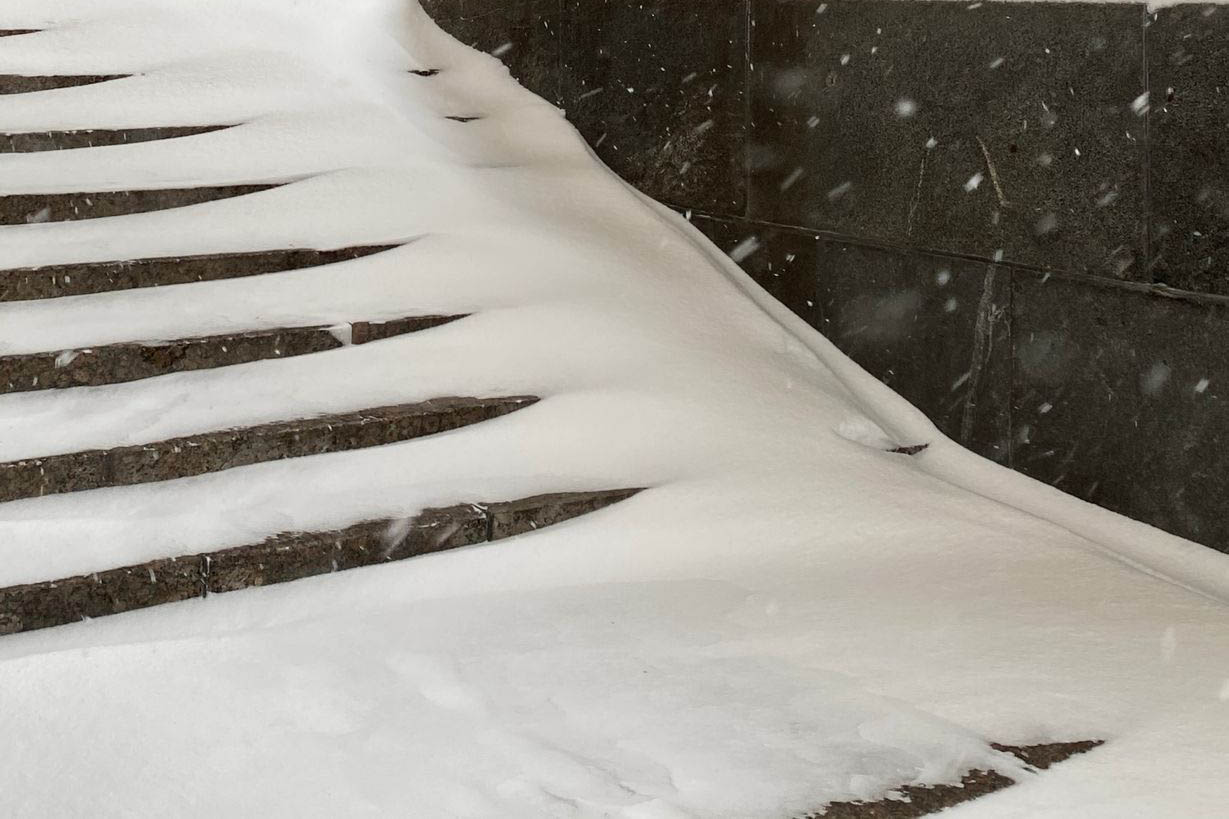
The freeze-thaw cycle is the silent killer of outdoor concrete in New England. Water gets into the small pores and surface cracks. It freezes, expands by about 9–10 percent in volume, and pushes from the inside out. Do that a hundred times over a few winters and you’ve got spalling, cracking, and heaving. You’ve seen it — everyone in southern NH has. That patch of steps that looked fine in September and had a chunk missing by April.
The numbers back this up. Granite has a compressive strength that typically ranges from 17,000 to over 23,000 psi. Concrete, by comparison, usually falls between 3,000 and 5,000 psi for residential applications. That’s not a small difference — it’s roughly four to five times more density and resistance built into the stone itself. That physical difference is exactly what determines how a material handles freeze-thaw pressure year after year.
Granite’s crystalline structure — that tight interlocking matrix of quartz and feldspar formed over millions of years under the earth — is dense enough that water simply doesn’t penetrate the same way. Industry experts consistently note that granite’s low water absorption rate is what makes it the gold standard for freeze-thaw climates. Concrete, no matter how well it’s mixed, is a fundamentally more porous material. That porosity is what the freeze-thaw cycle exploits.
Add road salt into the picture (and if you’re in Milford, Nashua, or Manchester, you know how aggressively the roads get salted), and the case for granite gets even stronger. Salt lowers the freezing point of water, which allows moisture to penetrate deeper into concrete before it freezes — creating more damaging internal pressure with every cycle. Over time, repeated exposure leads to scaling, spalling, and reduced lifespan. Granite doesn’t absorb salt the same way. It shrugs it off.
What Concrete Has Going for It
A poured concrete driveway or foundation makes total sense. You need a large, flat, structural surface — that’s concrete’s wheelhouse. It’s affordable for big pours, easy to form into any shape, and perfectly adequate for applications where aesthetics aren’t the priority.
Stamped or colored concrete has gotten better too. Contractors have figured out how to make it look good right out of the gate. The problem is what happens five or ten years later when the color fades, the sealant breaks down, or the first real crack appears. Repairing it without the patch being obvious is nearly impossible.
For front steps, a mailbox post, a garden bench, or pool edging — the stuff people actually see every day — concrete is fighting an uphill battle against time and New Hampshire weather.
What Happens Over 20 Years
Industry research shows that concrete steps in northern climates typically need major attention within 10 to 25 years, while properly installed granite steps routinely last 50 to 100 years or more. We’ve had customers tell us their granite steps from 20 years ago still look the way they did on installation day — not because they’ve been maintained obsessively, but because granite in a well-prepared setting simply holds up.
I’ve watched the same neighborhoods for decades. The homes that put in granite steps in the early 2000s still look great. The homes that went with concrete steps have either replaced them, painted over them to hide the staining, or have steps that are noticeably worn and patched.
Same story with mailbox posts. Wood rots. Vinyl cracks. Concrete chips and gets clipped by plows. A granite post, once it’s set in the ground, isn’t going anywhere. We engrave addresses right into the stone — no stick-on numbers to fall off, no painting to redo. It just sits there looking sharp year after year.
With pool coping, there’s an extra wrinkle: pool chemicals. Chlorine eats away at a lot of materials over time, and the combination of chemical exposure plus freeze-thaw is brutal on concrete coping. Granite doesn’t stain from pool water, holds up to the chemistry, and the coarse natural texture gives you better grip on a wet pool deck than polished concrete does.
The Price Question People Always Ask
Yes, granite costs more upfront. I won’t pretend otherwise.
But here’s how I look at it: if you put in concrete steps and they need to be repaired or replaced in 12–15 years, you’ve paid twice. Factor in zero maintenance on granite — no sealing every season, no patching, no repainting — and the long-term math often works in stone’s favor, not against it.
One way to think about it: concrete has a lower purchase price but a higher cost of ownership. Granite has a higher purchase price and a near-zero cost of ownership over decades. For a lot of homeowners in our area, once they run those numbers out 20 or 30 years, granite isn’t the expensive option anymore.
The Granite We Work With
We carry Stanstead and Caledonia — two very different looks that cover a wide range of home styles.
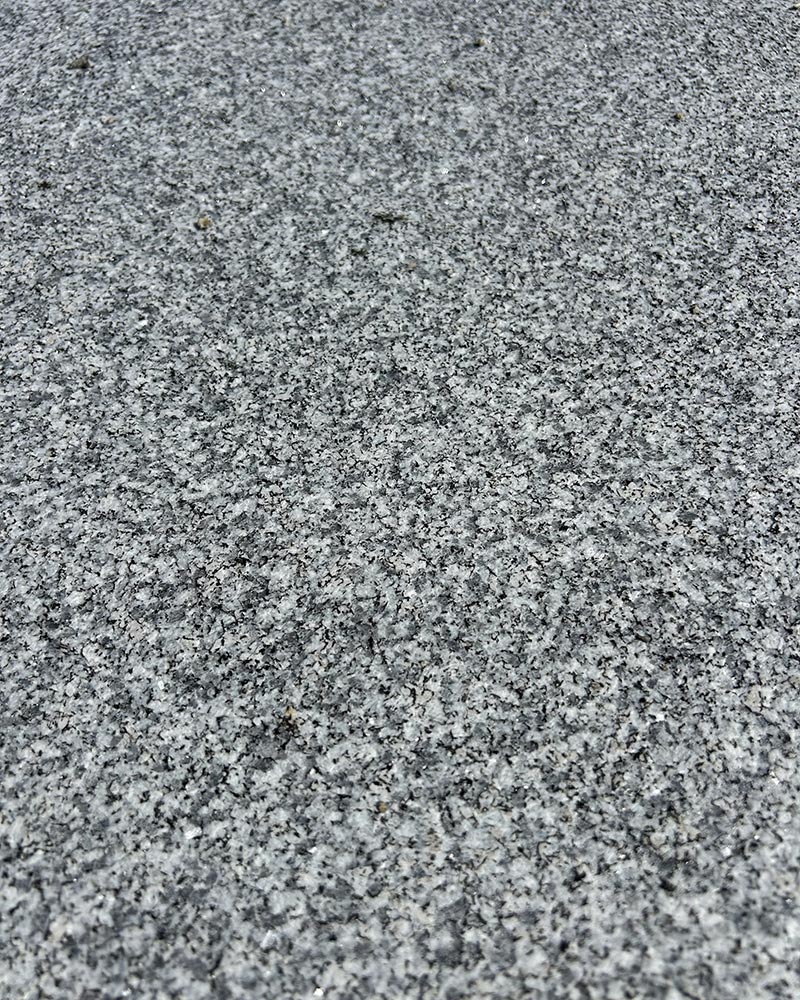 Stanstead
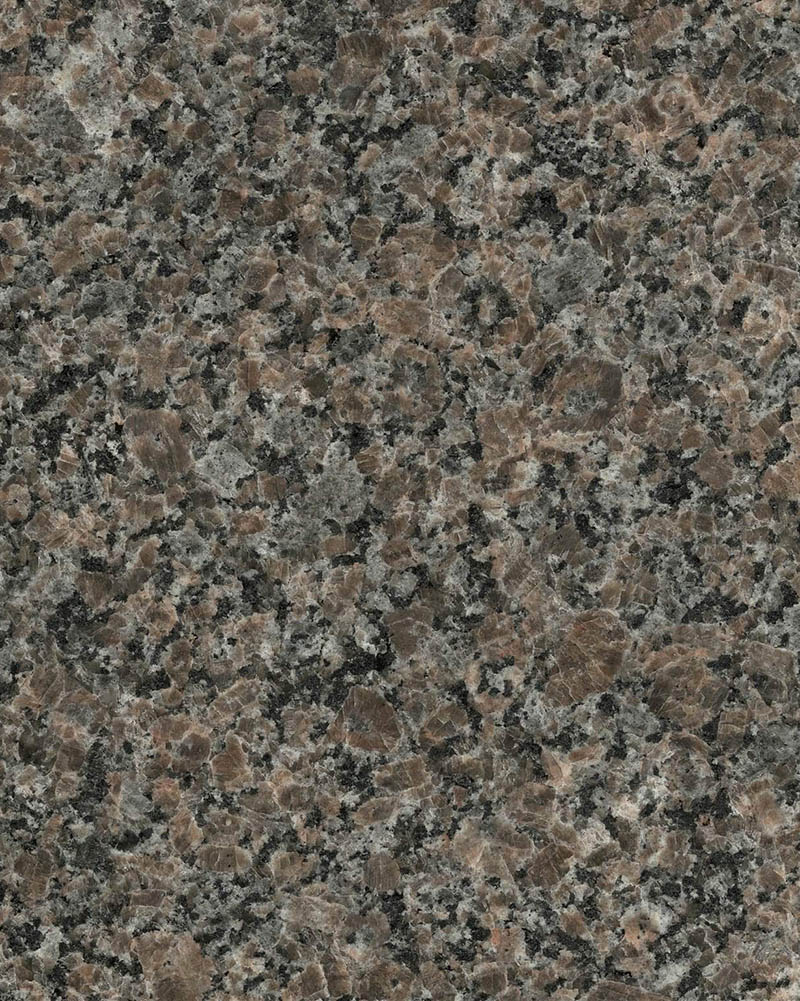 Caledonia
Stanstead is a lighter, finer-grained granite that pairs beautifully with traditional New England homes. Caledonia is darker, with more visual depth — it’s a popular choice for contemporary builds and homes with darker trim or stonework.
When you come to our yard in Milford, you can see both side by side and get a real sense of how they’d look against your home. Photos don’t fully do it justice — the depth of natural stone is something you have to see in person.
When to Call Us
If you’ve got concrete steps that are showing their age, a mailbox post that’s seen better days, or you’re putting in a pool and want coping that’ll outlast the liner, come talk to us. We serve homeowners throughout Milford, Nashua, Manchester, Merrimack, Goffstown, Wilton, Brookline, Temple, and the surrounding towns.
We’re not a big box operation. Every piece gets cut and finished here. We’ve been doing this since 2005 as a business — and in the industry our whole lives — and we stand behind every job.
Give us a call at 603-249-1102 or reach out online. We’re happy to walk you through your options without any pressure.
Related Articles You Might Like:
- A Lasting Tribute: Milford Granite Proud to Help Honor 9/11 Victims in Memorial Park
- New Hampshire Winters Don't Care What Your Steps Are Made Of
- Granite Mailbox Posts: The Ultimate Curb Appeal Upgrade That Lasts a Lifetime
- Elevate Your Homes' Entrance with Durable and Elegant Granite Steps
- Granite Sign Posts: The Smart Investment for Lasting Business Signage